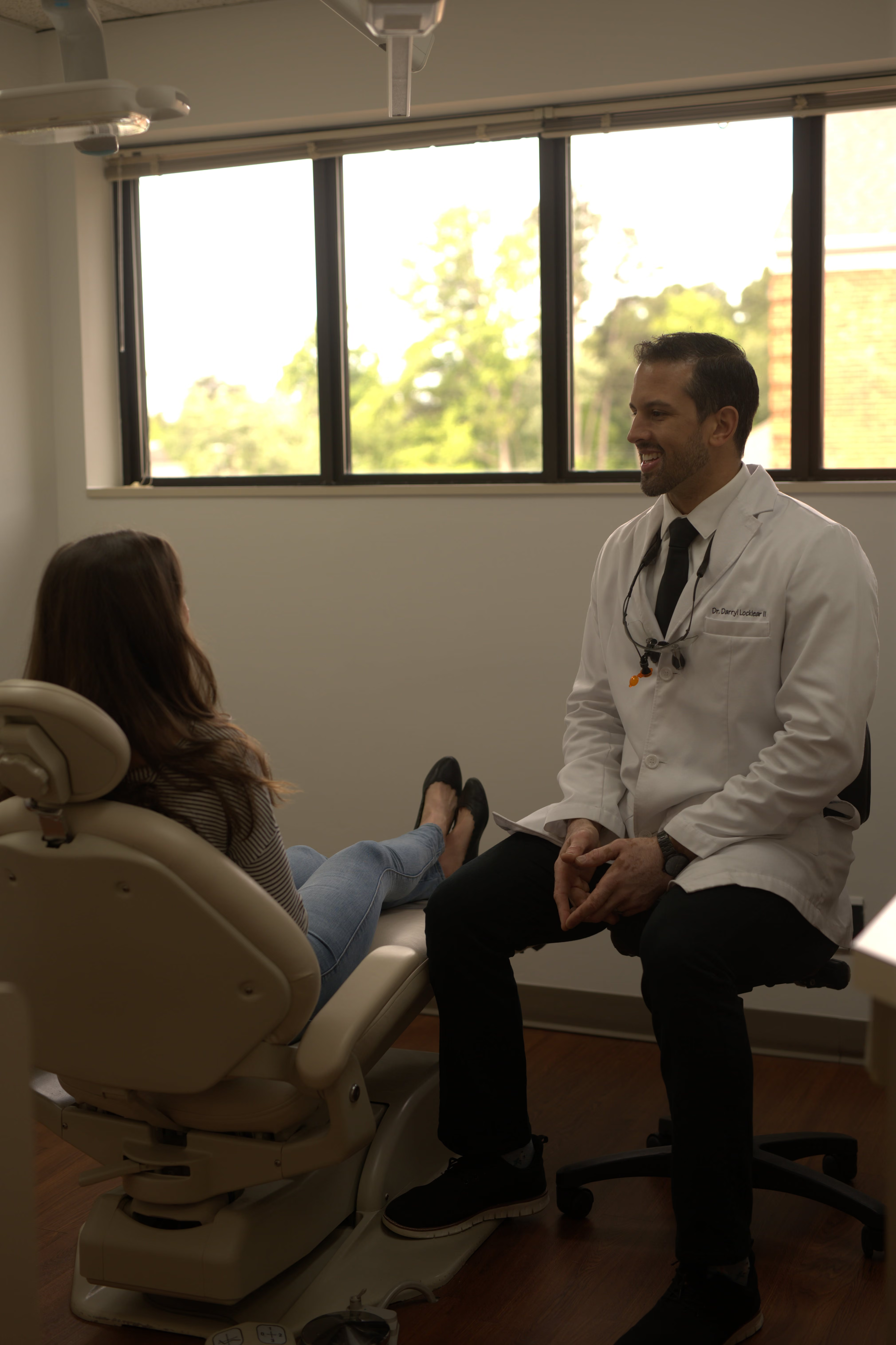
A dental implant gives you a strong new root, but the crown on top is the part everyone sees and the part you chew with every day. At Locklear Dentistry, your implant crown is custom designed to match your neighboring teeth, fit your bite exactly, and stand up to years of use, so the finished tooth looks and feels like it was always there.


Did you know…
An implant has no ligament around it the way a natural tooth does, so it can't shift to absorb an uneven bite. That's why every implant crown is carefully checked and adjusted so it meets your other teeth just right.

The Benefits of Implant Crowns in Greensboro
No items found.
Our Greensboro Implant Crown Process
Before & Afters
A smile is worth 1,000 words.
See real patient success stories.